
About
When I was working with Zambia’s Ministry of Gender on child marriage, I expected to find what most people expect. Things like older men, coercion, poverty as a blunt force. What we actually found was more complicated and more human than that. Most child marriages in the communities we visited involved two young people making a rational choice. In a context where opportunities were limited and the future felt uncertain, marriage offered something immediate and real: adult status, belonging, recognition in the community.
You can’t design a program to address that with an awareness campaign. You have to understand the social context first. That’s what I do.
When I worked in Palestine the problem looked different on the surface but the lesson was the same. Working with UNICEF on a project to support families advocating for the inclusion of children with disabilities, we found that mothers felt positively about advocating for their children and believed their communities expected it of them. What they lacked wasn’t awareness or motivation — it was confidence in their own ability to act. The strategy we developed focused entirely on building those skills.
Two countries, two issues, one consistent finding: the answer is almost never more information.
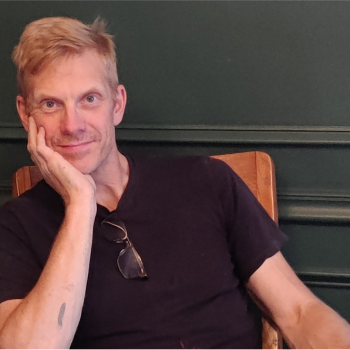
Closer to home, I worked with the Vermont Department of Health on a project called Beneath Our Skin — an effort to understand Black Vermonters’ perceptions and experiences around COVID-19 vaccination. Rather than designing a messaging campaign, the project began by creating safe spaces for community members to share their stories through digital storytelling, visual art, and music. What emerged wasn’t a data set — it was a deeper understanding of the intergenerational relationship between Black Americans and a health system that has not always served them well. That understanding became the foundation for everything that followed.
The context is always different. The principle is always the same.
At Metropolitan State University in St. Paul I teach communication to adult students — working professionals, first-generation college students, people balancing families and jobs and school simultaneously. They bring knowledge and experience into the classroom that most traditional universities never tap. My job is to create the conditions where that knowledge becomes visible and useful. It’s the same job I do as a consultant — just in a different room.
What keeps me in this work after more than thirty years is simple. It’s the moment a complex idea breaks through and you can see it on someone’s face. It’s watching a community group take a framework we’ve been working with and apply it to a problem I hadn’t even considered. It’s hearing, months or years later, that something we built together is still making a difference.
That’s what this work is for. Not the reports, not the frameworks — the moments when real people find new ways to solve real problems.